

What Causes a Garage Door to Stop Working?
Garage doors are one of the most frequently used systems in any home, yet most people don’t think about how many moving parts are involved until something goes wrong.
Behind the scenes, components like springs, cables, rollers, tracks, and the opener all work together to ensure smooth operation. When even one part fails, the entire system can stop working.
Understanding the most common causes of garage door issues can help you catch problems early and avoid costly repairs.
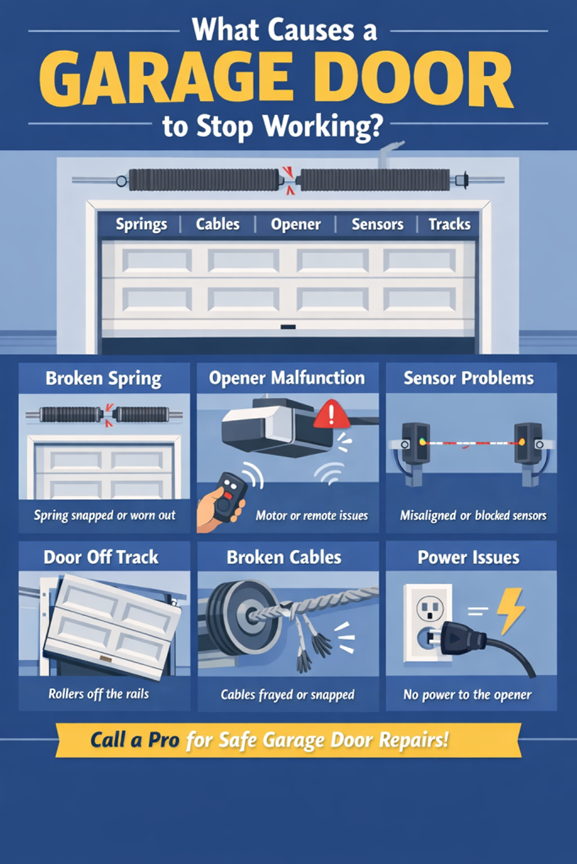
How a Garage Door System Operates
Before diving into common failures, it helps to understand how the system functions as a whole.
A properly working garage door relies on several key components:
Springs
Opener system Lift cables
Rollers Tracks
Hinges Safety sensors
Wall controls and remotes
If any of these parts wear out, break, or fall out of alignment, the door may stop operating correctly.
Broken Garage Door Springs
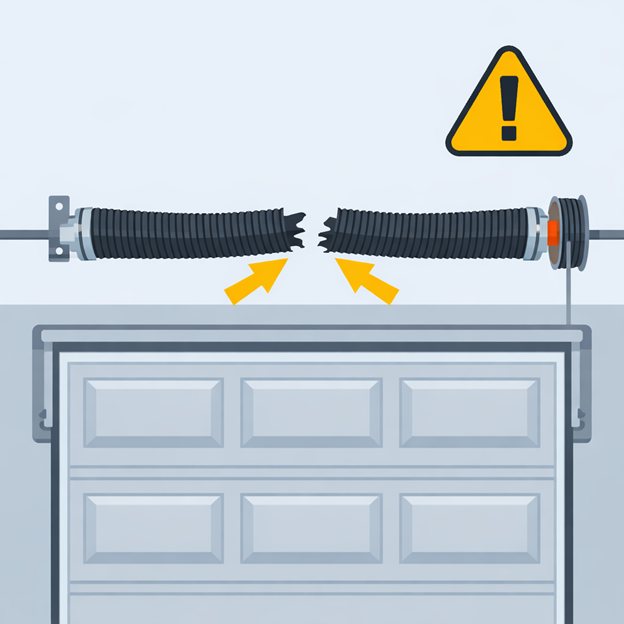
One of the leading causes of garage door failure is a broken spring.
Springs are responsible for offsetting the weight of the door, making it possible to lift and lower safely. Since most residential doors weigh well over 100 pounds, the system depends heavily on properly functioning springs. When a spring breaks, the opener often cannot lift the door.
Common signs of a broken spring:
Loud snapping sound from the garage
Door only opens a few inches
Door feels unusually heavy
Opener struggles or stops mid-lift
Visible separation in the spring
Springs naturally wear down over time and are typically rated for a limited number of cycles.
Garage Door Opener Issues
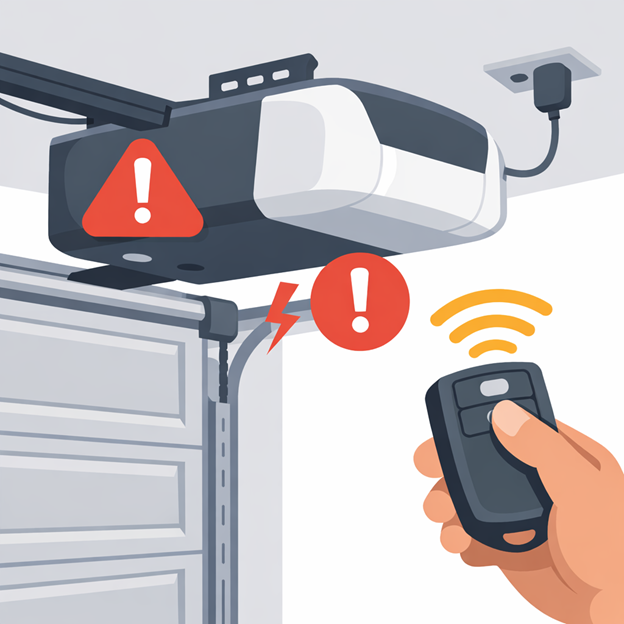
When the opener malfunctions, the door may not open or close at all.
The opener uses a motor and drive system to move the door. If any internal components fail, operation can stop suddenly.
Typical opener problems include:
Burned-out motor
Worn or stripped gears
Electrical or wiring issues
Circuit board failure
Remote or signal problems
Keep in mind, sometimes the opener appears to be the issue when the real problem is mechanical (like a broken spring).
Safety Sensor Problems
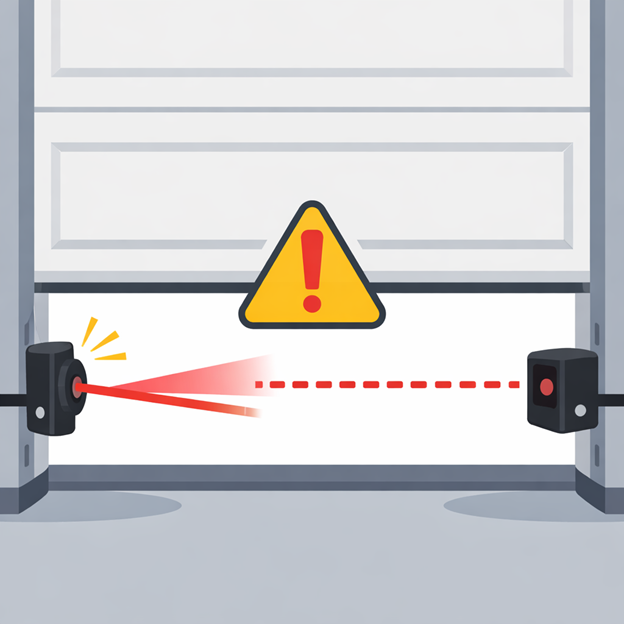
Modern garage doors include safety sensors near the bottom of the tracks. These prevent the door from closing if something is in the way.
If the sensors are dirty, blocked, or out of alignment, the door may not close properly.
Signs of sensor issues:
Door starts to close, then reverses
Door won’t close using the remote
Flashing or blinking sensor lights
Door only closes when holding the wall button
In many cases, simply cleaning or realigning the sensors resolves the issue.
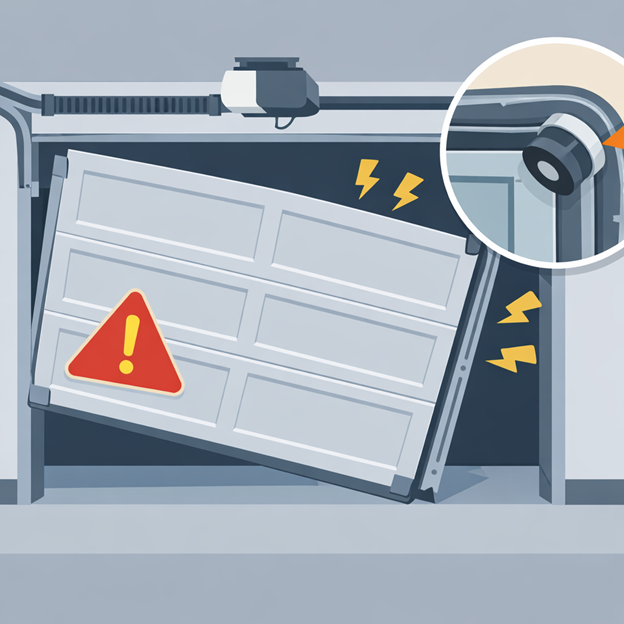
Garage Door Off Track
If your garage door comes off its tracks, it can no longer move safely and may stop working entirely.
The tracks guide the rollers as the door opens and closes. When something disrupts that path, the door can become crooked or jammed.
Common causes include:
Broken or loose cables
Bent or damaged tracks
Worn rollers
Impact (vehicle bump, etc.)
Loose hardware
An off-track door can be dangerous and should not be forced.
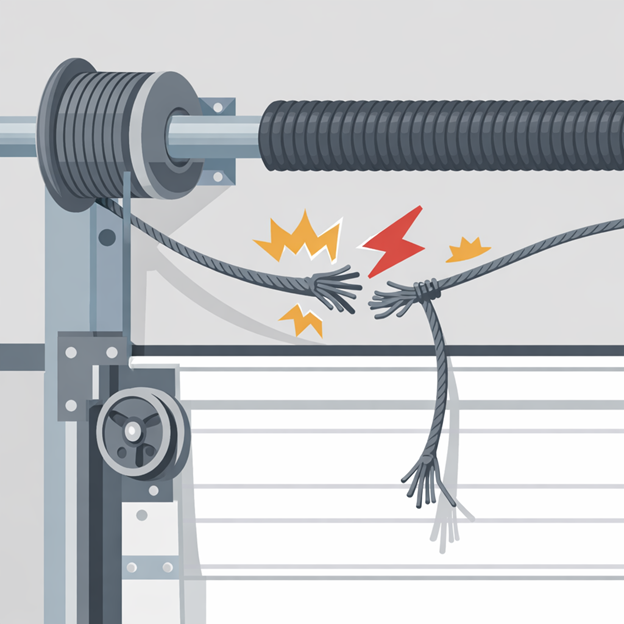
Broken Garage Door Cables
Cables work alongside the springs to lift and lower the door evenly. Because they are under high tension, they can fray or snap over time.
Signs of a cable issue:
Door appears uneven or angled
One side lifts higher than the other
Loose or hanging cable near the drum
Door stops midway
When a cable fails, the door may become unsafe to operate.
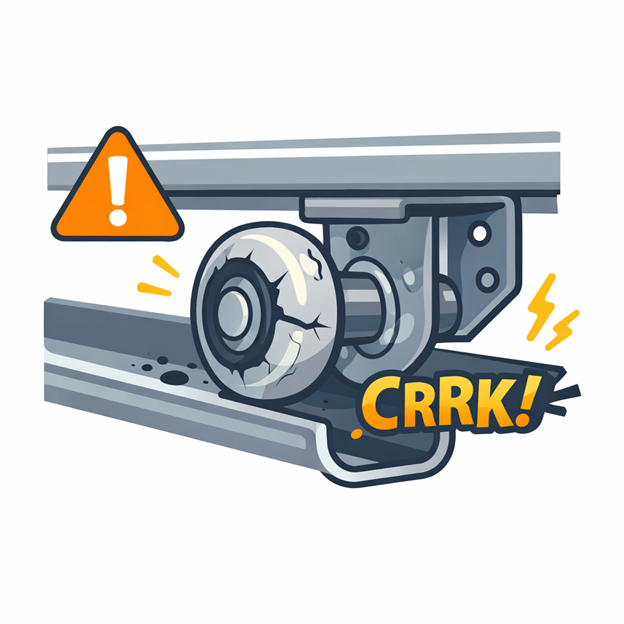
Worn Rollers or Hinges
Rollers and hinges allow the door to move smoothly along the track system. Over time, these parts wear down and can affect performance.
Symptoms of worn components:
Grinding or squeaking noises
Door shakes while moving
Jerky or uneven motion
Door sticks or slows down
Replacing worn rollers can significantly improve operation and reduce noise.
Remote or Control Issues
Sometimes the problem is simple—your garage door remote may not be working.
Quick things to check:
Replace remote batteries
Test the wall control
Confirm power to the opener
Reprogram the remote if needed
If the wall button works but the remote doesn’t, the issue is usually isolated to the remote.
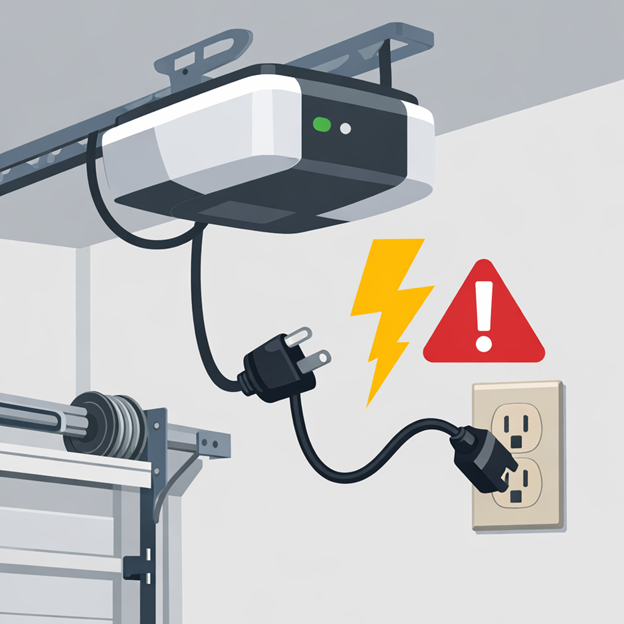
Power Supply Problems
Garage door openers require a steady power source. If power is interrupted, the system will not function.
Common causes include:
Tripped breaker
Unplugged opener
Reset GFCI outlet
Damaged power cord
Always rule out electrical issues before assuming a mechanical failure.
Lack of Routine Maintenance
Many garage door problems develop due to lack of regular maintenance.
Without proper care, parts wear out faster and small issues turn into major repairs.
Basic maintenance includes:
Lubricating moving parts
Tightening hardware
Inspecting cables and tracks
Testing door balance
Cleaning sensors
Routine service helps extend the life of your system and prevents unexpected breakdowns.
When to Call a Professional
While some minor issues can be handled by homeowners, many garage door repairs involve high-tension components and can be dangerous.
You should call a professional for issues involving:
Springs
Cables
Off-track doors
Opener motor failure
Structural damage
Professional service ensures the repair is completed safely and correctly.
How to Prevent Garage Door Problems
Preventative care is the best way to avoid sudden failures.
Homeowners can reduce issues by:
Scheduling annual inspections
Lubricating moving parts regularly
Replacing worn components early
Keeping tracks clean
Monitoring door balance
Consistent maintenance keeps your door operating reliably year-round.